Artem
15, from Kherson
These stories describe violence against children.
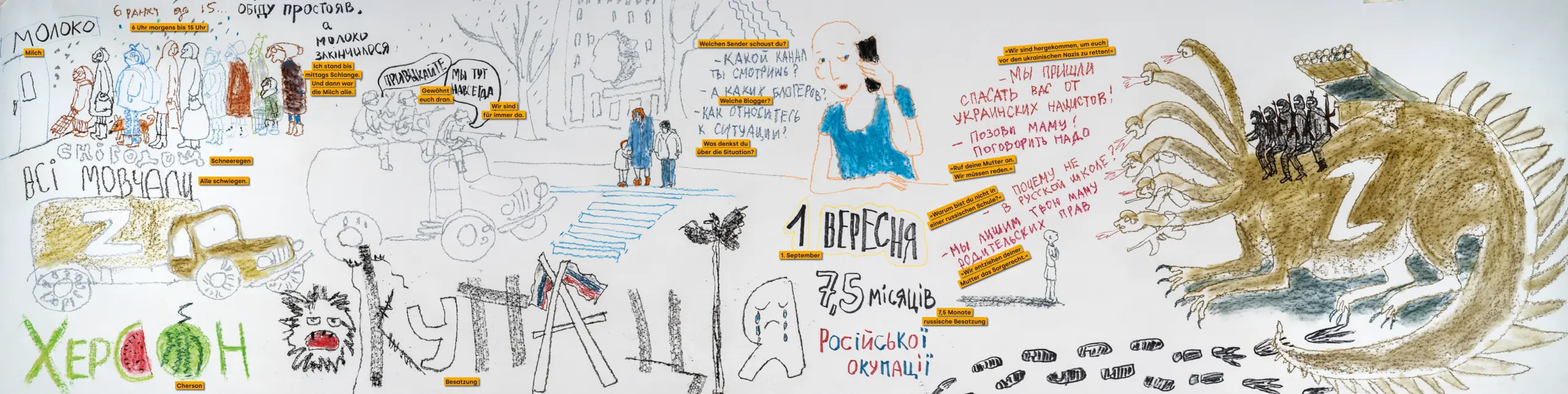
Artem comes from Kherson. When russian troops occupied the city in 2022, living conditions for the people there deteriorated dramatically. Soon food ran short.
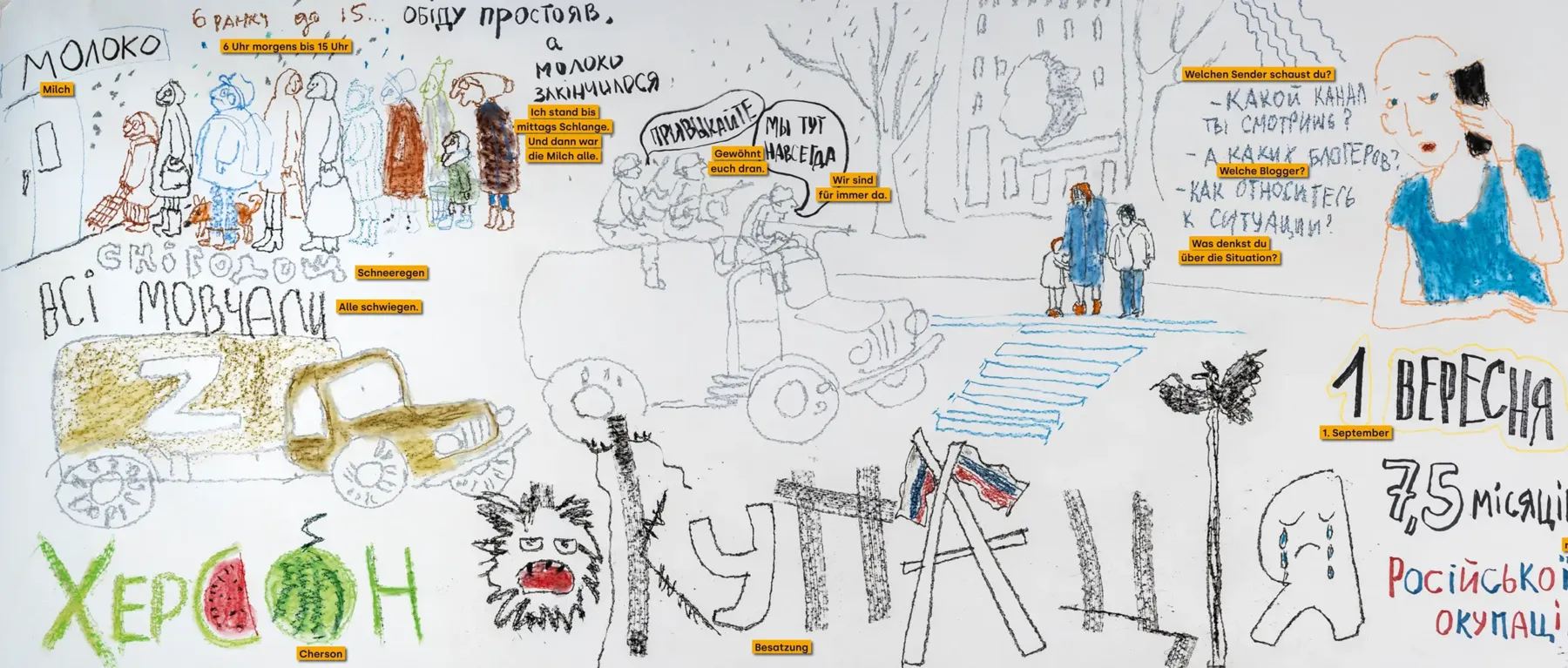
In sleet and cold Artem queued for hours for the bare necessities, and still often came home without even a litre of milk.
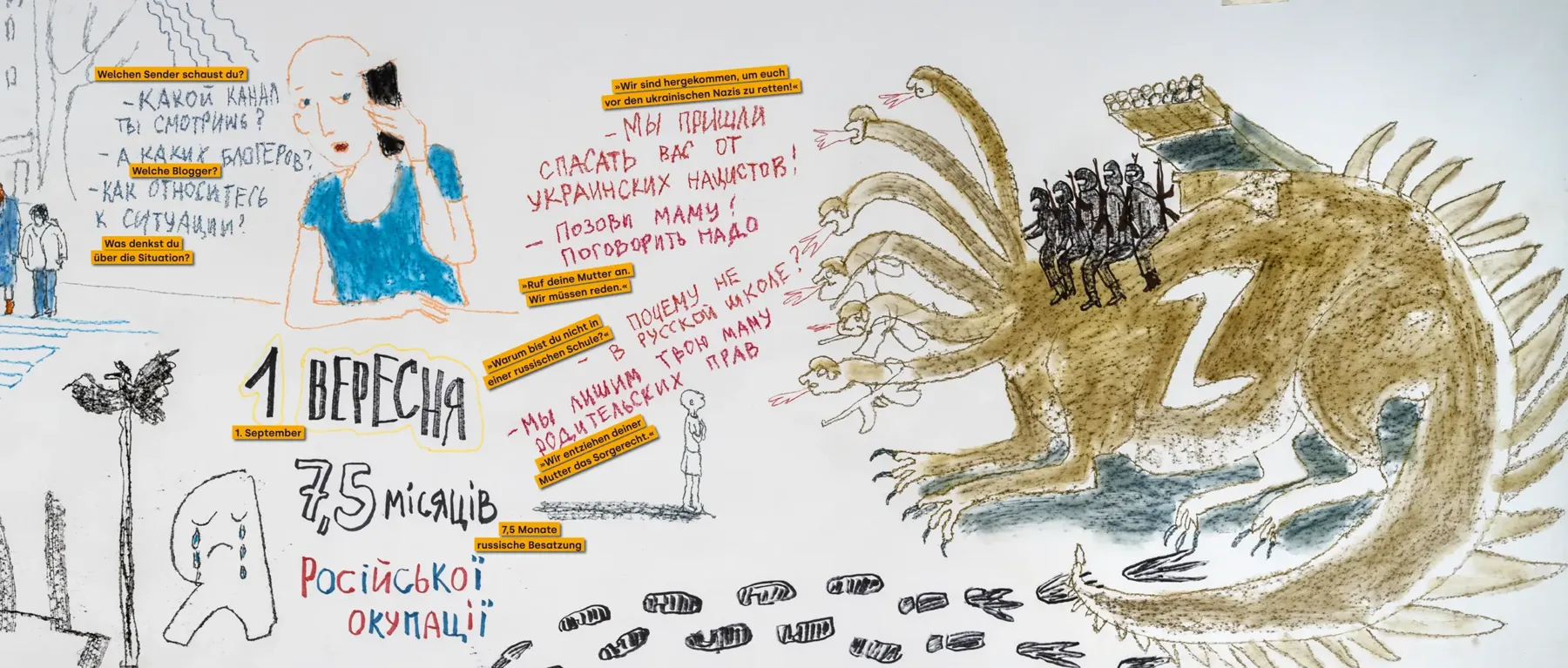
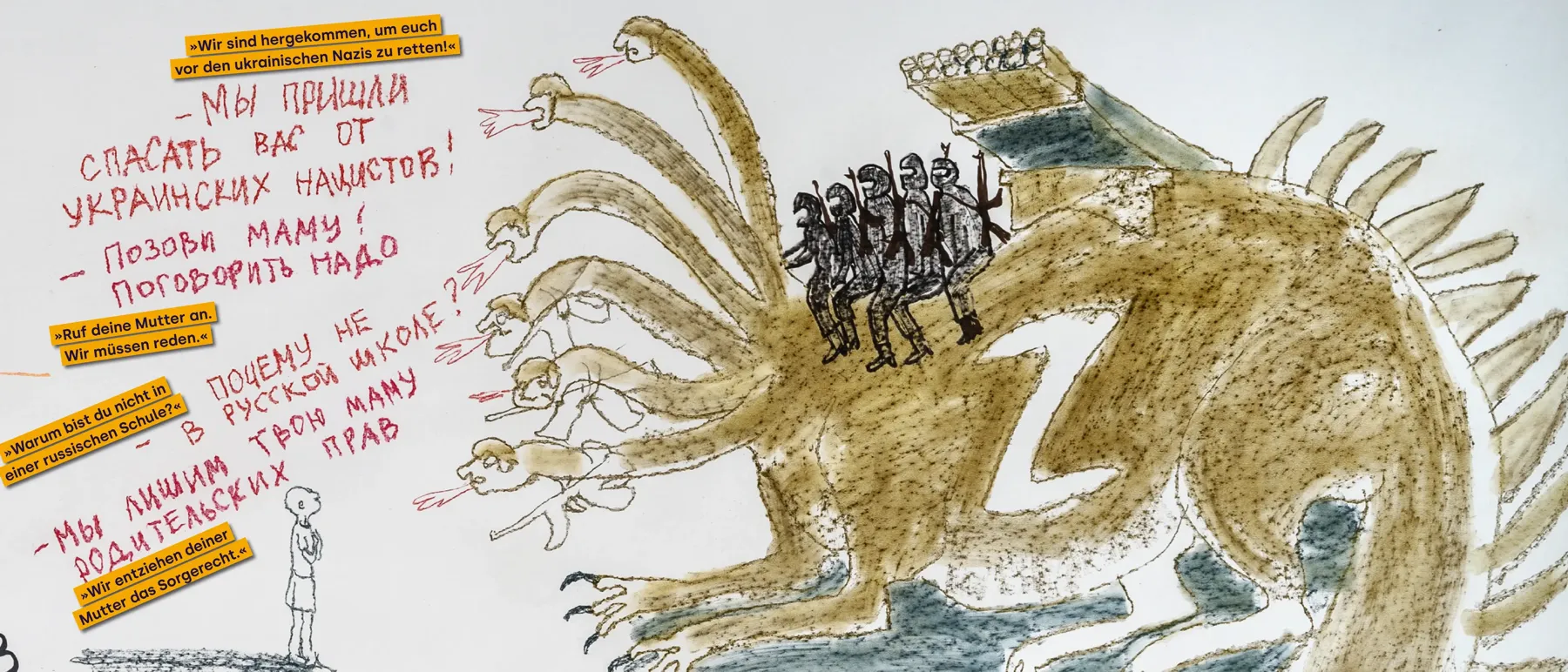
The russian soldiers shouted down from their tanks: people should be grateful. They had come to save the city and would stay forever. The Ukrainian army, they said, would kill anyone who had accepted so much as food from the russians: men, women and children.
The occupiers put Artem's mother under heavy pressure. They threatened to take away her custody if she did not send her son to a russian propaganda school.
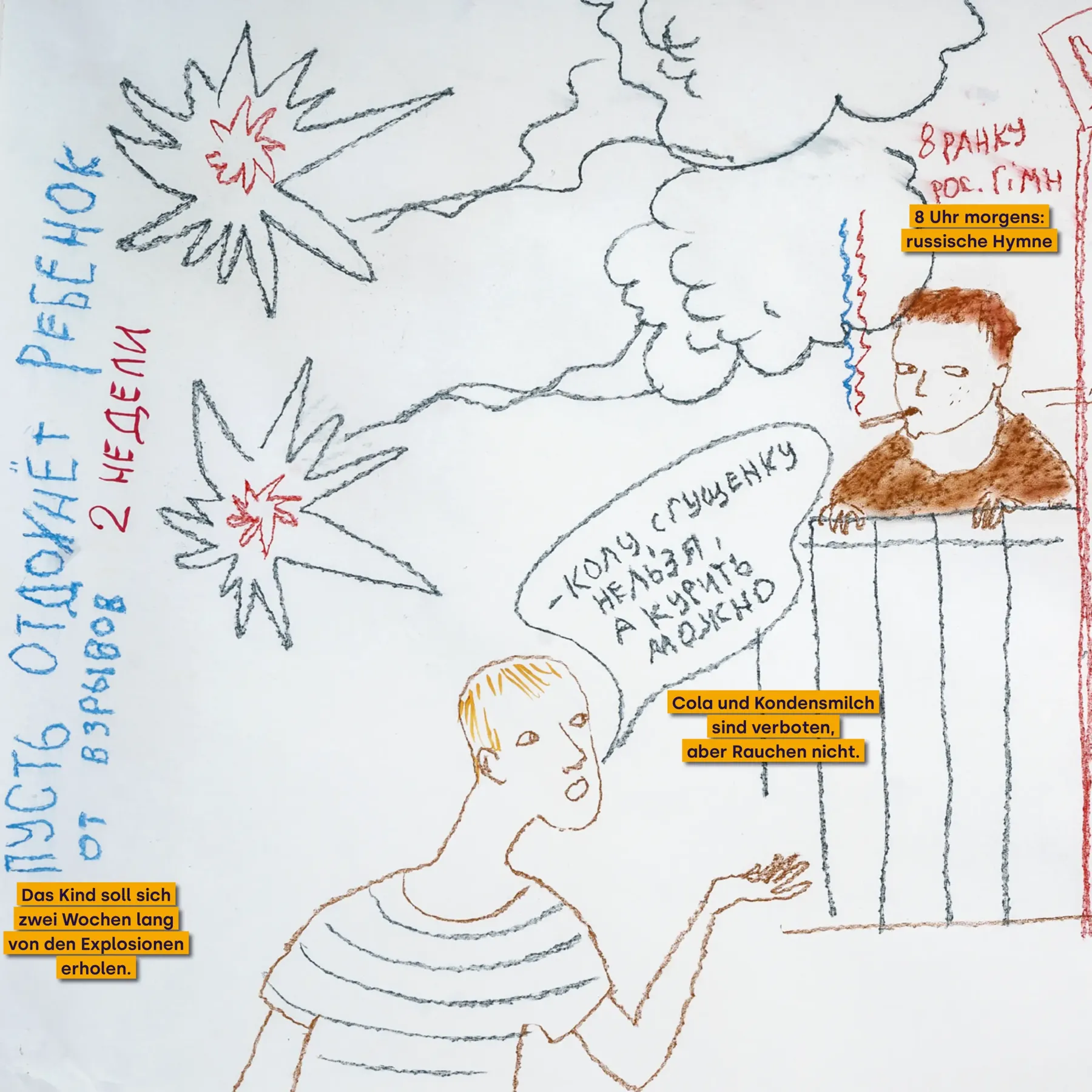
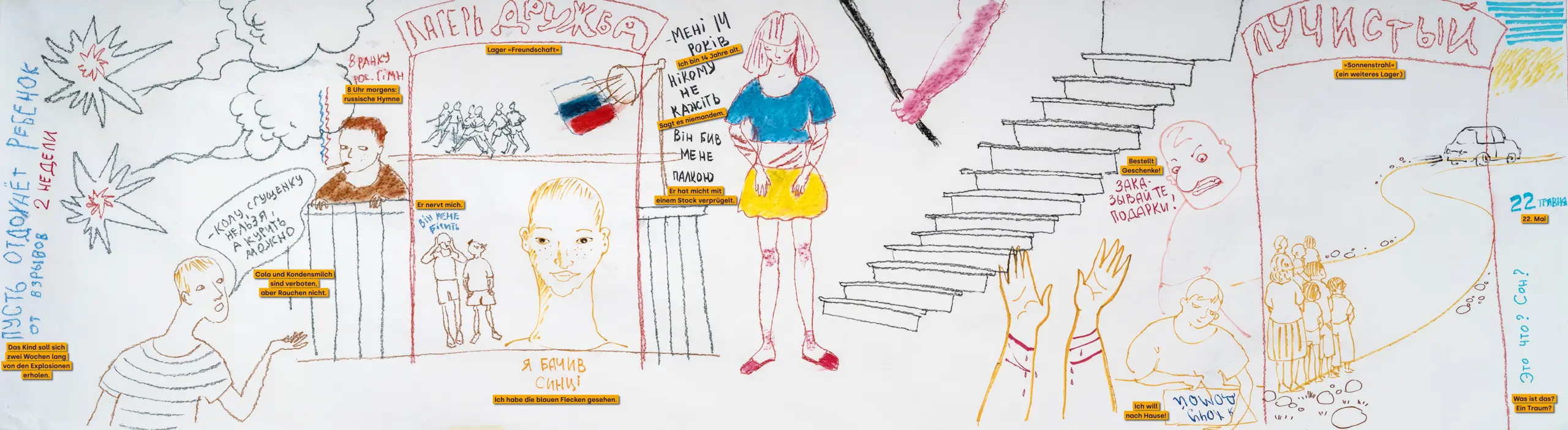
Soon afterwards she was also pressed to sign him up for a russian-organised summer camp. The pressure and fear grew so great that Artem's mother finally agreed to send him away for what she was told would be a “two-week stay”.
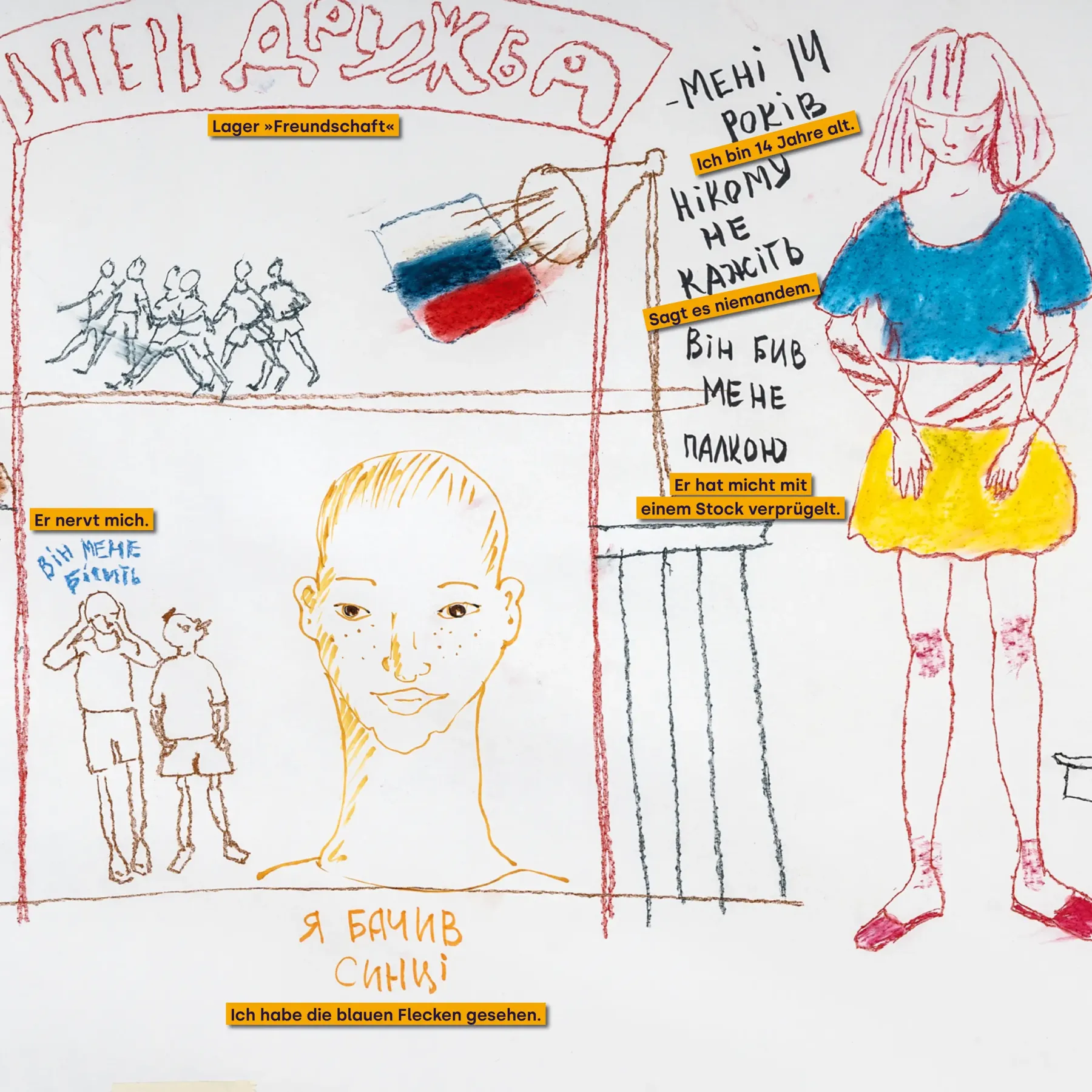
It turned into months. Artem's time in the camps “Friendship” and “Sunbeam” in occupied Crimea was marked by fear and contradictions. In the mornings the children had to sing the russian anthem. Speaking Ukrainian was forbidden, while smoking was tolerated.
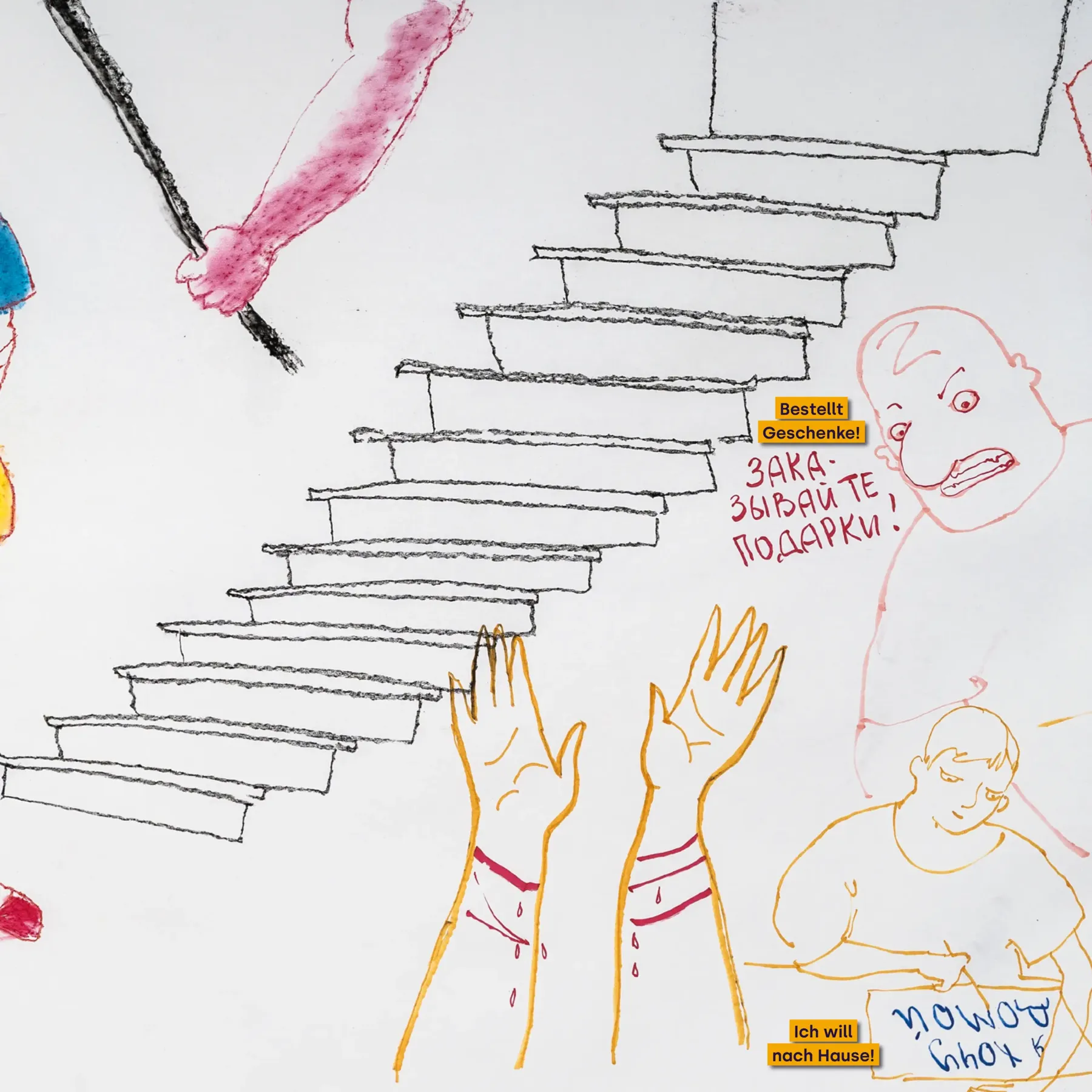
Children were punished without explanation, sometimes with brutal violence. Artem saw things no child should experience: a girl covered in bruises, another with cut wrists after she had tried to take her own life.
After long months of coercion and fear, Artem was finally freed in a rescue operation. At last he returned to his family in Kherson, which the Ukrainian army had liberated in the meantime.
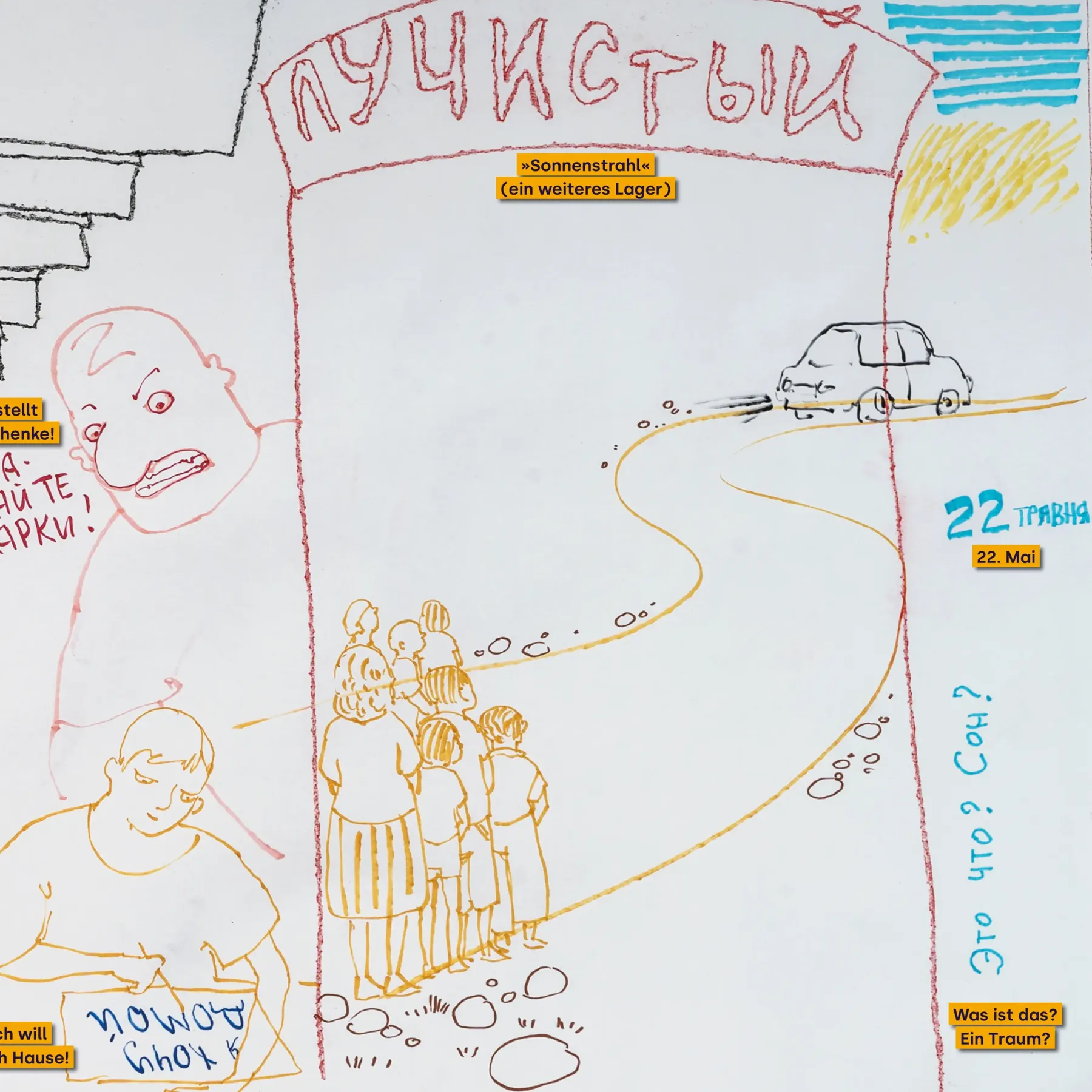
The whole drawing
Scroll sideways to see all of it